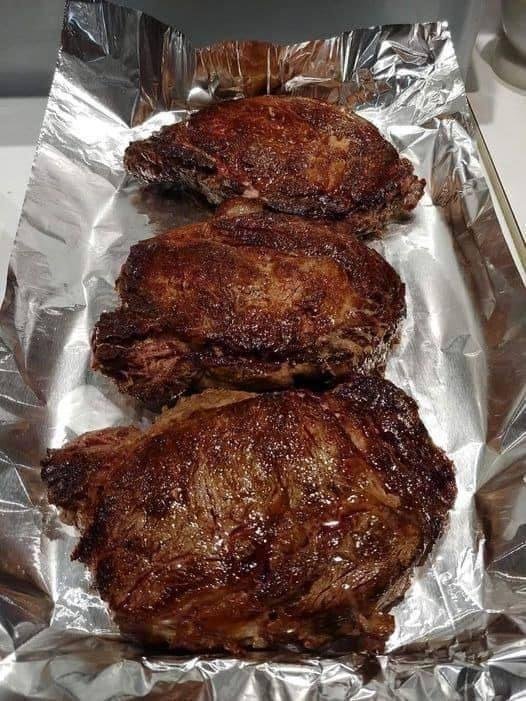
There are few meals as satisfying, luxurious, and deeply flavorful as a perfectly cooked ribeye steak. Known for its rich marbling, tender texture, and full beefy taste, ribeye is the king of steaks—and when paired with a silky garlic butter baste, it becomes an unforgettable dining experience. This Perfect Garlic Butter Ribeye Steak recipe brings restaurant-quality results straight to your kitchen, using simple ingredients and straightforward techniques that anyone can master. Whether you’re cooking for a special occasion or simply treating yourself to a high-end dinner at home, this guide walks you through everything you need to know to get the perfect sear, the perfect doneness, and the perfect buttery finish every time.
Why You’ll Love This Garlic Butter Ribeye Steak
This recipe stands out because it blends simplicity and luxury in the best way. Ribeye is already known for its tenderness and flavor, but garlic butter takes it to the next level. As the steak sears in a hot skillet, adding butter, crushed garlic, and fresh herbs transforms the natural juices into a rich baste that caramelizes beautifully. Each spoonful of melted butter deepens the flavor and helps create that coveted golden crust.
You’ll love this recipe because:
- It’s fast. From start to finish, you can have a gourmet meal in under 20 minutes.
- It’s foolproof. The cast-iron method delivers a perfect crust every time.
- It’s restaurant-quality. Garlic butter and herbs elevate the steak into something truly special.
- It works for any skill level. Whether you’re a beginner or a steak pro, you’ll get excellent results.
This ribeye pairs well with mashed potatoes, roasted vegetables, baked potatoes, or a simple salad, making it versatile enough for weekday dinners and impressive enough for guests.
Ingredients
To achieve the perfect combination of richness and flavor, you’ll need just a handful of simple ingredients:
For the Steak:
- 1–2 ribeye steaks, 1 to 1.5 inches thick
- 1 tablespoon olive oil
- Salt and black pepper, generously applied
- Optional: steak seasoning or smoked paprika
For the Garlic Butter Baste:
- 3 tablespoons unsalted butter
- 3–4 garlic cloves, smashed
- 2–3 sprigs fresh thyme or rosemary
- Optional: pinch of red pepper flakes for heat
Equipment Needed:
- Cast iron skillet (highly recommended)
- Meat thermometer
- Tongs for flipping
How to Make the Perfect Garlic Butter Ribeye Steak
The secret to a great ribeye lies in a combination of proper seasoning, high heat, and a rich basting butter that infuses the meat with flavor.
Step 1: Bring the Steak to Room Temperature
Allow the ribeye to sit out for at least 20–30 minutes before cooking. This step helps it cook more evenly and achieve a better crust.
Step 2: Pat Dry and Season Generously
Moisture prevents browning, so pat the steak completely dry using paper towels.
Season both sides heavily with salt and pepper. Ribeye is thick, so don’t be shy—the seasoning helps create the crust.
Optional additions:
- Garlic powder
- Onion powder
- Smoked paprika
- Steak seasoning
Step 3: Preheat the Cast Iron Skillet
Place the skillet over high heat and let it become extremely hot—almost smoking. This ensures deep caramelization and that signature steakhouse crust.
Add the olive oil and swirl to coat the pan.
Step 4: Sear the Ribeye
Place the ribeye in the skillet and don’t move it for 3–4 minutes. This initial sear locks in flavor and forms the crust.
Flip the steak and sear the other side for another 3–4 minutes.
Step 5: Add the Garlic Butter and Herbs
Reduce the heat slightly and add the butter, smashed garlic, and thyme or rosemary to the skillet.
Once melted, tilt the pan and use a spoon to baste the steak repeatedly with the melted garlic butter.
This enriches the meat, enhances browning, and infuses it with the aroma of garlic and herbs.
Step 6: Check Doneness
Use a thermometer for accuracy:
- Rare: 120–125°F
- Medium-rare: 130–135°F
- Medium: 140–145°F
- Medium-well: 150–155°F
For ribeye, medium-rare to medium is best because it allows the fat to melt fully, creating tenderness and juiciness.
If the steak is too thick, you can finish it in the oven at 400°F (200°C) for 5–7 minutes.
Step 7: Rest the Steak
Transfer the ribeye to a plate and let it rest for 5–10 minutes. Resting allows the juices to redistribute, preventing dryness.
Tips for the Perfect Ribeye Every Time
1. Use high heat for maximum crust
Steak needs intense heat to brown properly. A cast iron pan is perfect because it holds heat well.
2. Don’t overcrowd the skillet
If cooking multiple ribeyes, make sure the pan isn’t overcrowded or they will steam instead of sear.
3. Butter should be added after the initial sear
Adding it too early will cause burning—and burnt butter ruins the flavor.
4. Let the steak rest
Even the best-cooked steak will dry out if sliced too early.
5. Don’t skip aromatics
Garlic, thyme, and rosemary give the steak that classic steakhouse flavor and aroma.
Serving Suggestions
Your ribeye is now perfectly cooked, rich with garlic butter, and ready to serve. Here are some ideas for making it a complete meal:
- Garlic mashed potatoes
- Loaded baked potatoes
- Creamed spinach
- Buttery corn on the cob
- Roasted asparagus or broccoli
- Caesar salad
Drizzle any remaining pan juices over the steak for maximum flavor.
Why This Ribeye Steak Recipe Works
This recipe succeeds because it combines time-tested cooking techniques with simple ingredients that enhance the natural quality of the beef rather than overpowering it.
Here’s what makes it exceptional:
- Searing creates flavor. The Maillard reaction is responsible for the rich brown crust that steak lovers crave.
- Garlic butter adds richness. It melts into the steak, creating a velvety finish and boosting depth.
- Fresh herbs elevate the aroma. Rosemary and thyme complement the beef beautifully.
- Resting preserves tenderness. A small step that makes a huge difference.
- Controlled doneness ensures perfect texture. The thermometer guarantees that your steak is cooked exactly how you like it.
When these elements come together, the result is a steak that is juicy, flavorful, and restaurant quality—without the restaurant price.